





Black Diamond vs Onyx vs Spinel vs Black Moissanite: Which Black Stone Is Right for You?
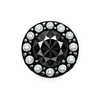
Black diamond, onyx, black spinel and black moissanite can look alike across a room, but they are four different materials. A black diamond is the hardest (10 on the Mohs scale) and has a bright, mirror-like shine. Black moissanite (9.25) is lab-made and nearly as hard. Black spinel (8) is a natural, affordable gem with a deep, flat black. Onyx (6.5 to 7) is a soft, usually dyed stone that scratches and dulls with daily wear. For a ring you will wear every day for decades, a black diamond or black moissanite lasts best; onyx suits rings you wear now and then.
People who want a black engagement ring often hear "are you sure?" first, sometimes from family, sometimes from the jeweler. One buyer was told a black stone "wouldn't look like a real engagement ring". She had dark, warm-toned skin, and colorless diamonds looked too cool and bright on her. The answer most people gave her is the right one: a ring becomes an engagement ring when you say yes to it. The real question is which black stone will still look the way you want it to in twenty years. That is what this comparison is for.
Black diamond vs onyx vs spinel vs black moissanite: the short comparison
| Black diamond | Black moissanite | Black spinel | Onyx | |
|---|---|---|---|---|
| What it is | Diamond (carbon) | Silicon carbide | Spinel (magnesium aluminum oxide) | Chalcedony, a form of quartz |
| Natural or lab-made | Natural (ours are natural, color enhanced) | Lab-made | Natural | Natural, but black onyx is usually dyed |
| Hardness (Mohs) | 10 | 9.25 | 8 | 6.5 to 7 |
| Look | Mirror-like, almost metallic shine off sharp facets | Bright shine; some dark stones show a hint of fire | Deep, glassy black | Flat, waxy-to-glassy black; often smooth (cabochon) |
| Everyday engagement ring? | Yes, in a protective setting | Yes | Yes, with some care | Occasional wear; it scratches |
| Price level | Highest of the four, below a white diamond of the same size | Moderate | Low | Low |

Is black onyx the same as a black diamond?
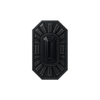
No. Onyx is a variety of chalcedony, a microcrystalline form of quartz, while a diamond is crystallized carbon. They differ in almost every way that matters on a hand. Onyx is about 6.5 to 7 on the Mohs scale; a diamond is 10. Everyday dust contains quartz grains as hard as onyx itself, so onyx slowly loses its polish. Most black onyx in jewelry is chalcedony dyed black, a long-accepted practice, while a black diamond's color is its own, or, as with ours, color enhanced and stated on the certificate. Onyx is also usually cut smooth or flat, so it has a soft, even shine instead of the sharp facet reflections of a diamond. And onyx is not obsidian either: obsidian is volcanic glass, softer still at about 5 to 5.5.
Is onyx good for an engagement ring?
It can be, if you accept what it is. Onyx is inexpensive and has a beautiful, inky black, but in a ring worn every day it will scratch, its edges can chip if knocked, and it may need re-polishing or replacing over the years. One honest argument for it: if it gets damaged, replacing it costs little. If you choose onyx, pick a bezel or a raised setting that protects the edges, and take the ring off for the gym, gardening and cleaning. If you want the ring to look the same at your twentieth anniversary as on the day you got engaged, a harder stone is the safer choice.
Black spinel vs black diamond: what is the difference?
Black spinel is a natural gemstone, about 8 on the Mohs scale, and usually untreated. It is hard enough for everyday rings with sensible care, and it costs far less than a black diamond. The difference shows in the light. Spinel has a deep, glassy black. A black diamond reflects light off its surface with diamond's high luster, which reads as a brighter, almost metallic shine. People describe black diamonds as "metallic" and spinel or onyx as "a flat, deep black". Neither is better; they are different looks. A diamond is also harder, so its facet edges stay crisp longer.
Black moissanite vs black diamond: which is better?
Moissanite is silicon carbide. Natural moissanite is extremely rare, so gem moissanite, including black moissanite, is made in a lab. At 9.25 on the Mohs scale it is very hard and holds up to daily wear, and it costs less than a natural black diamond. In colorless moissanite, its strong fire is the main attraction. In a black stone, most of that color play disappears, so the comparison comes down to three things:
- Origin. A black diamond formed in the earth. Moissanite was grown in a laboratory. For some people this matters a great deal; for others, not at all.
- Look. Both shine. A black diamond has diamond's mirror-like luster. Some black moissanite shows a faint flash of color, and moissanite is doubly refractive, so under a loupe its facet edges can look doubled.
- Price. Moissanite costs less. A natural black diamond costs more, though less than a white diamond of the same size.
Will anyone notice? With black stones, almost no one can tell across a table. The difference is in what you know about the stone on your hand, and in what its certificate says.
Do black diamonds sparkle?
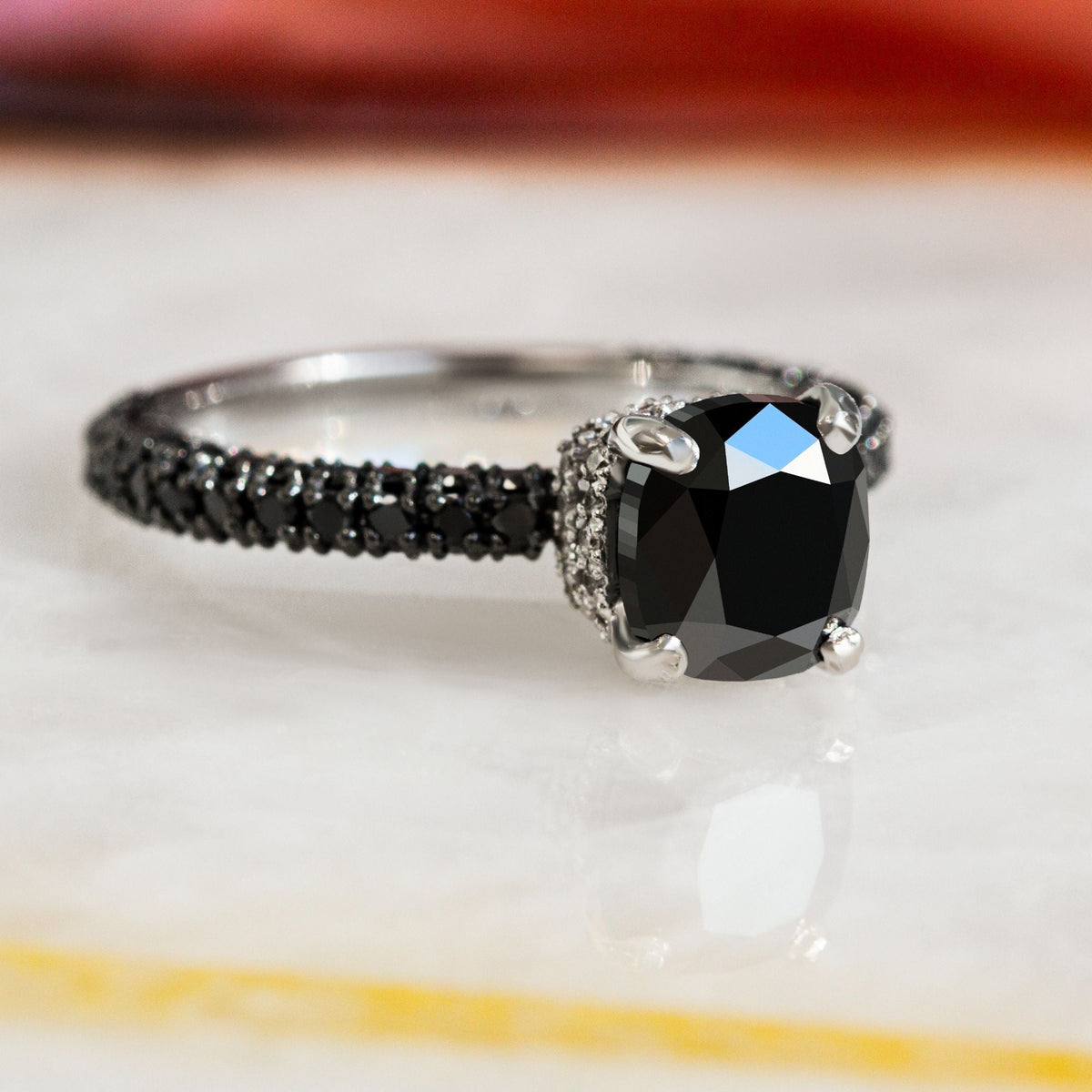
Not the way white diamonds do, and it is good to know that before you buy. A black diamond is nearly opaque, so light does not travel through it and come back as white sparkle and rainbow fire. Instead, light reflects off its polished facets, giving a dark, mirror-like shine that changes as the ring moves. Some people find that "a little flat"; others love that it looks like nothing else. See it in a video or in person before you decide. How light behaves in different stones: do diamonds reflect or refract light?
Which black stone is the most durable?
Hardness, the resistance to scratching, puts them in this order: diamond (10), moissanite (9.25), spinel (8), onyx (6.5 to 7). Toughness, the resistance to chipping and breaking, is a separate question. Any diamond can chip if it is struck hard on an edge or a point. Black diamonds tend to contain many inclusions, which is part of what makes them dark, so a setting that protects the edges matters: a bezel, a half bezel, or prongs that cover any points. Onyx scratches first, but chalcedony is fairly tough, so it is more likely to dull than to shatter.
How much does each cost?
Onyx and black spinel are inexpensive stones; in many rings, the gold and the work cost more than the stone. Black moissanite sits in the middle. A natural black diamond costs the most of the four, but less than a white diamond of the same size. At Diana Rafael, a natural black diamond engagement ring costs about $850 to $5,500, and a ring with a 1 carat black diamond center starts around $1,700 (our own prices, October 2026; each product page shows the current price). The full breakdown: how much does a black diamond ring cost?
How can you tell a black diamond from onyx, spinel or moissanite?
- Look at the surface. A faceted black diamond shows sharp, mirror-like reflections from flat facets. Onyx is often cut smooth and has a softer, waxy shine.
- Do not rely on a flashlight. Black stones are nearly opaque, so the flashlight tests people use for white diamonds tell you nothing here.
- A basic diamond tester is not enough. Moissanite conducts heat much like diamond, so it can pass a simple thermal tester. A jeweler needs a moissanite (electrical) tester or a lab.
- Ask for the certificate. A lab report identifies the material and any treatment. Every black diamond we set comes with a certificate that names it a natural diamond and states its color enhancement. What that line means, and how a natural-color black differs: natural vs color-enhanced black diamonds.
Can you pair an onyx band with a black diamond engagement ring?
You can, and some people do to keep the budget in check. Two things to know. The blacks will not quite match: the diamond has a bright, mirror-like shine, the onyx a flatter black. And when two rings rub against each other all day, the harder stone wins: a diamond will scratch onyx over time. A band set with black diamonds avoids both problems. There is also no rule that the band has to come at the same time. Many couples add it later, as an anniversary gift.
Which black stone should you choose?
- A ring for every day, for life, and a natural stone: a black diamond in a protective setting.
- A hard stone for less, and lab-made is fine: black moissanite.
- A natural stone on a smaller budget, worn with care: black spinel.
- A fashion ring, a pendant, or a ring for evenings: onyx.
- A placeholder for the proposal: spinel or onyx, then choose the forever stone together.
Above all: choose the one you love on your own hand. If you can, see the stones side by side, in daylight, before you decide.
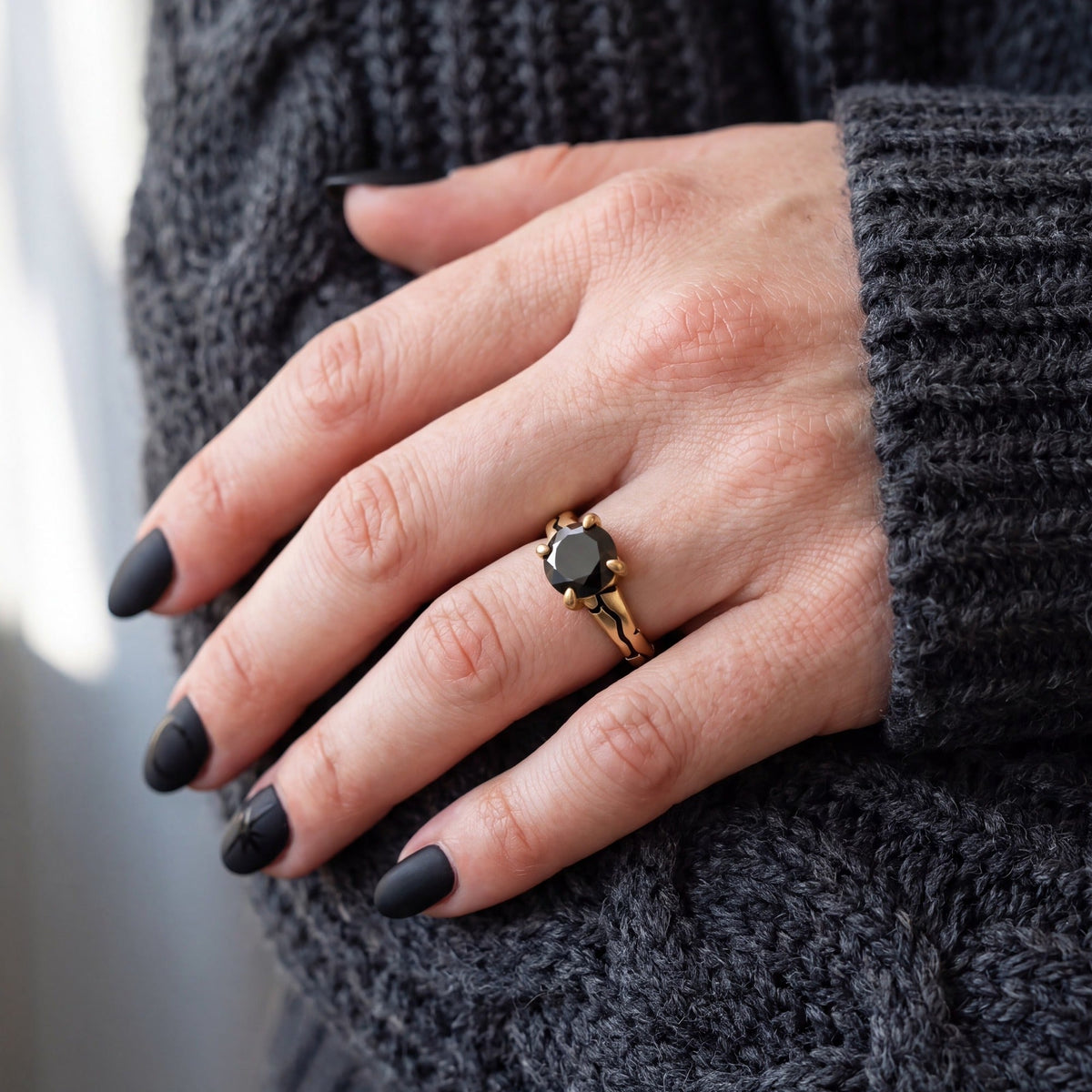
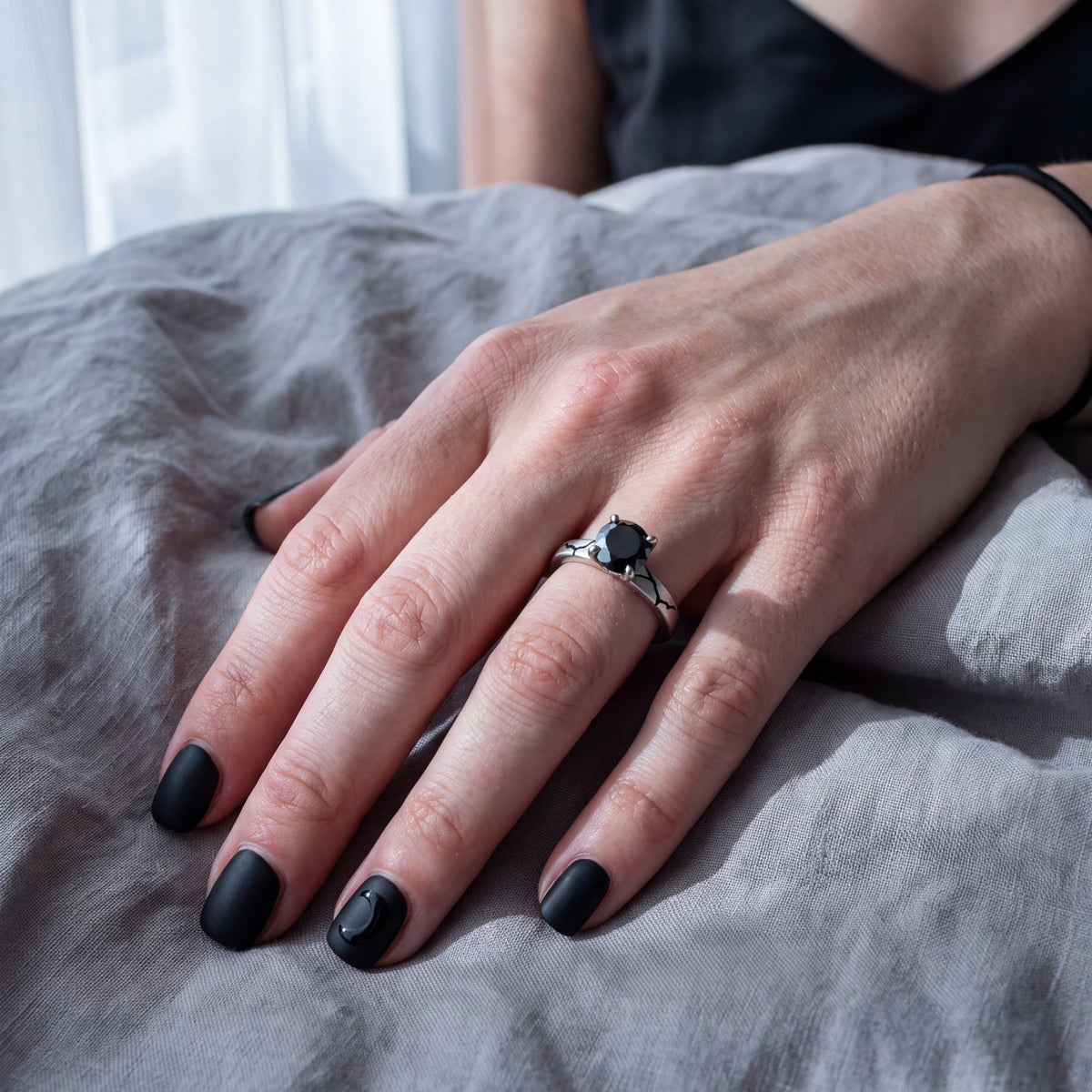
If a black diamond is your choice, start with our black diamond engagement rings: the round Kintsugi ring with its black enamel line, the Melusine 1.5 carat oval on a split shank, or the art deco Pleiades graduated baguette ring. If the contrast of black against white is what draws you, see black and white diamond rings and matching black diamond wedding bands. New to black diamonds? Our black diamond engagement ring guide covers settings, metals and care.
Black diamond vs onyx, spinel and moissanite: FAQ
What is the difference between black onyx and a black diamond?
Onyx is a soft form of chalcedony (quartz), about 6.5 to 7 on the Mohs scale, and black onyx is usually dyed. A black diamond is crystallized carbon, 10 on the Mohs scale, with a brighter, mirror-like shine. Onyx costs much less but scratches with daily wear.
Is black onyx good for an engagement ring?
For occasional wear, yes. For a ring worn every day, onyx will scratch and may chip, so it can need re-polishing or replacing. A protective bezel setting helps.
Is black moissanite better than a black diamond?
Neither is better; they are different. Black moissanite is lab-made, very hard (9.25) and less expensive. A black diamond is natural, harder (10) and costs more. In black stones the difference in sparkle is small.
Is black spinel valuable?
Black spinel is a natural gem but an inexpensive one. It is valued for its deep black color and its hardness (8), which makes it suitable for everyday jewelry with some care.
Which black stone is the hardest?
Black diamond (10 on the Mohs scale), then black moissanite (9.25), black spinel (8) and onyx (6.5 to 7).
Do black diamonds chip?
They can, like any diamond, if struck hard on an edge or a point. Black diamonds often contain many inclusions, so a protective setting such as a bezel or covered points is a good idea.
Can a diamond tester tell black moissanite from a black diamond?
A basic thermal tester cannot, because moissanite conducts heat much like diamond. A moissanite (electrical conductivity) tester or a gem lab can tell them apart.
Are your black diamonds natural?
Yes. Every black diamond we set is a natural, earth-mined diamond. Its color is enhanced, and the enhancement is written on its certificate.

Leave a comment
This site is protected by hCaptcha and the hCaptcha Privacy Policy and Terms of Service apply.