






Kintsugi and the Art of Being Put Back Together: What a Kintsugi Ring Means
Kintsugi is the Japanese art of mending broken pottery with lacquer and gold, so the crack becomes the most visible and most beautiful part of the bowl. A kintsugi ring carries the same idea onto the hand: something broke, it was put back together, and the repair is worn openly instead of hidden. People choose one to mark a recovery, a love that survived a hard season, a second marriage, or a new start after a divorce. It does not promise that nothing will break again. It promises to keep what breaks, and to light it.
We did not come to kintsugi from a book. REMNANT, our collection, began when everything we had built shattered and all that was left was pieces. We gathered them, and while we did, we understood that this is not our story alone. Every person carries a break like this. Every one of us has stood among our own pieces and picked them up. We are all whole, and none of us is perfect. Kintsugi is the oldest, clearest way we know to say both things at once. (The REMNANT story.)
What is kintsugi?
Kintsugi (金継ぎ) means "golden joinery". You will also see kintsukuroi, "golden repair"; the two words describe the same craft. A broken bowl or cup is rejoined with urushi, the sap-based lacquer used in Japan for centuries, and the seams are dusted with powdered gold (sometimes silver or platinum). The result is not a disguised repair. The cracks become lines of gold that follow the exact path of the break.
The story most often told places its beginning in the late 15th century: the shogun Ashikaga Yoshimasa sent a cracked Chinese tea bowl away for repair, it came back held together with clumsy metal staples, and Japanese craftsmen looked for a more beautiful way to mend. Whether or not it happened exactly so, kintsugi grew up with the tea ceremony and its taste for wabi-sabi: beauty in what is imperfect, unfinished and marked by time.
Real kintsugi is slow. Urushi does not dry; it cures in humid air, one thin layer at a time, and a single repair can take weeks or months. The quick "kintsugi kits" sold today use epoxy and gold-colored powder. They copy the look, not the method.
What does kintsugi mean in life and in love?
The philosophy is simple to say and hard to live: the break is part of the object's history, not something to erase. A mended bowl is not "as good as new". It is a different bowl, and many people find it more beautiful than the one that never broke.
In life, that becomes a way to look at a scar, an illness, a loss or a failure: not as a flaw in the story, but as its signature. In love, it becomes a way to look at a relationship that went through something and is still standing. Couples who choose kintsugi rarely do it because things were easy. They do it because things were not, and they stayed.

What is a kintsugi ring?
A kintsugi ring is a ring that shows a repaired break: a visible seam, crack or join that is part of the design. There are three ways to make one:
- Kintsugi on a stone or ceramic ring. A cracked jade, hematite or porcelain ring mended with lacquer or epoxy and gold. This is real repair work, done by kintsugi artists, one ring at a time.
- Gold seams on a gold ring. Lines of contrasting gold or texture that suggest a mended surface.
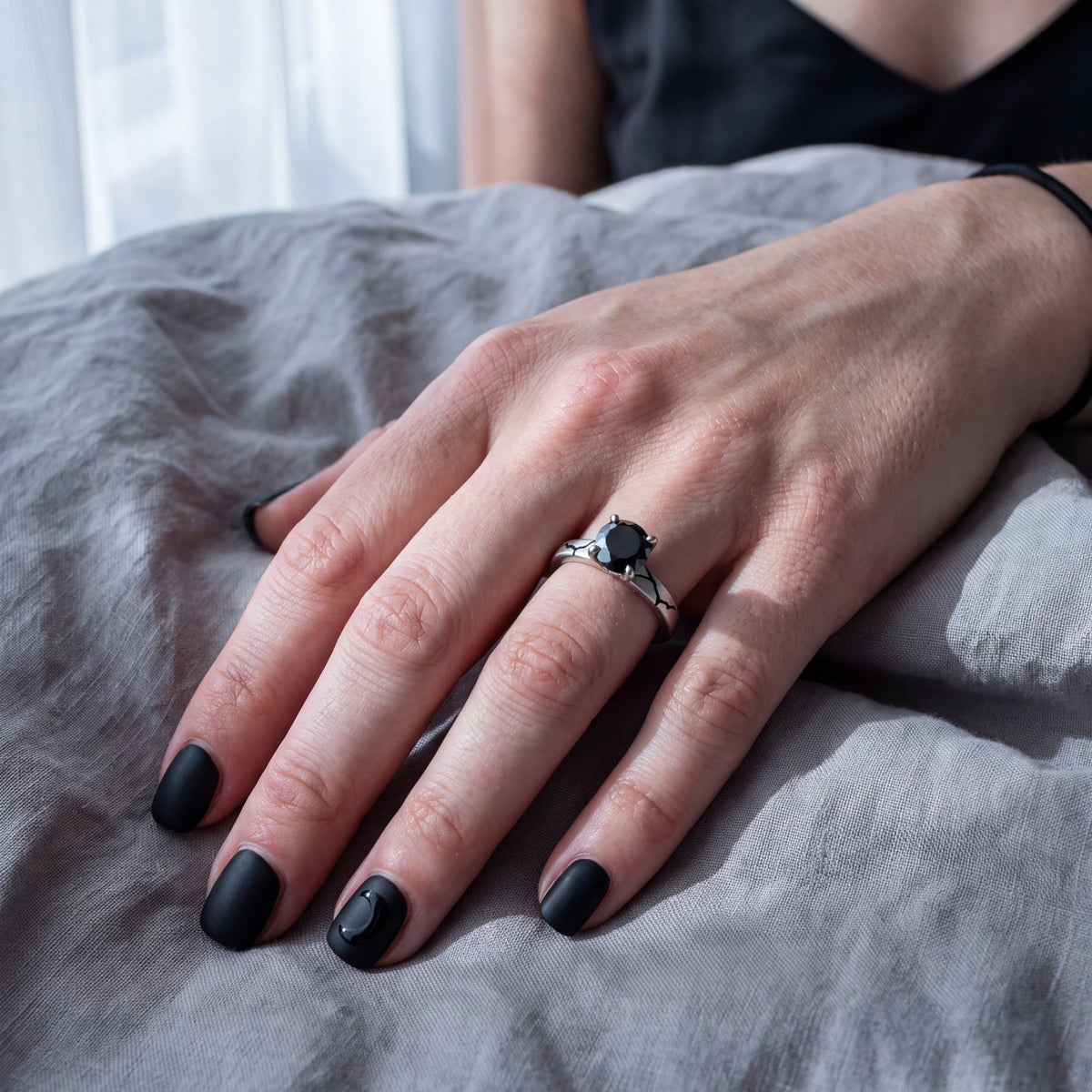
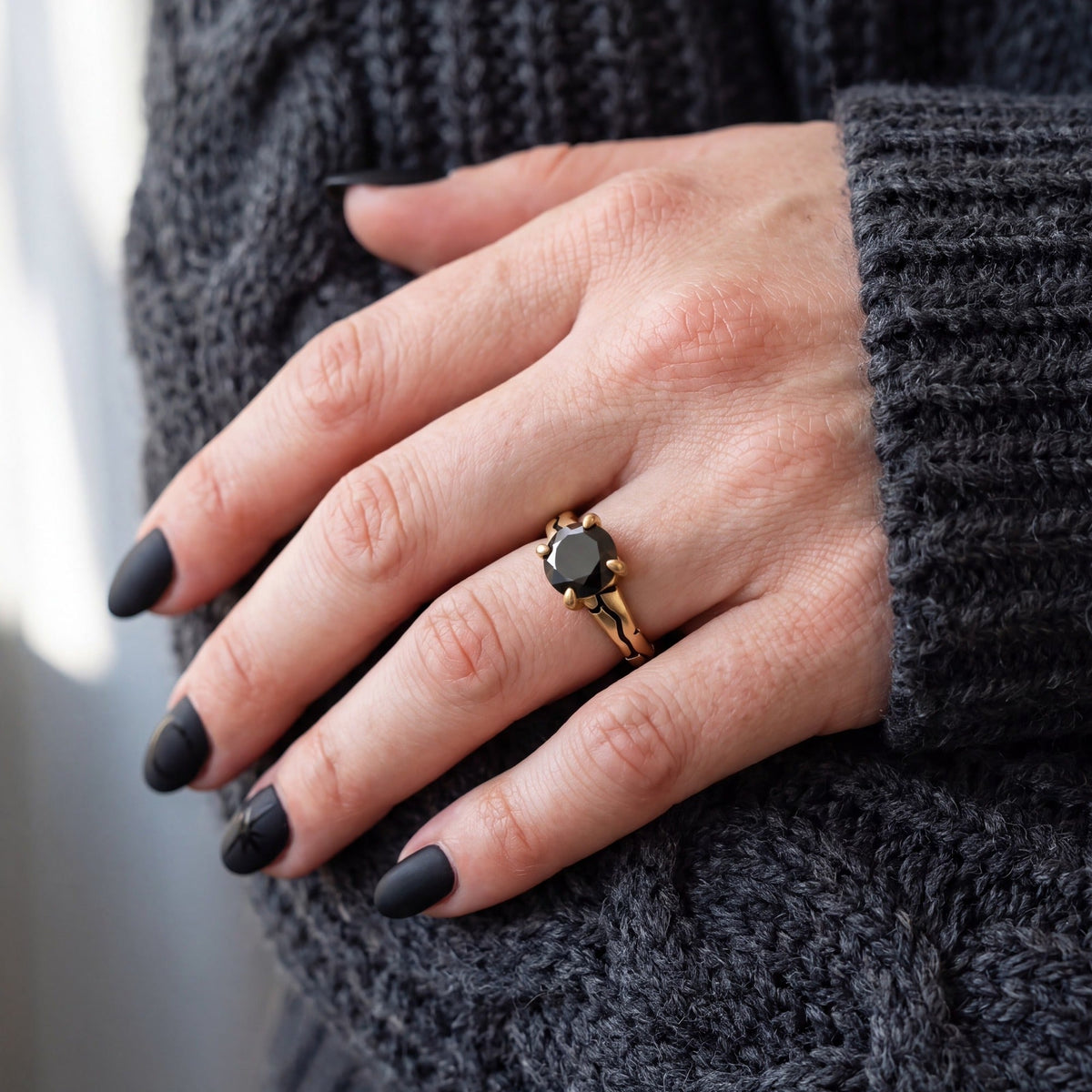
- A dark seam on gold. The opposite of a kintsugi bowl: the ring is the gold, and the crack is drawn in black. That is the way we chose.
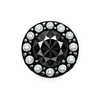
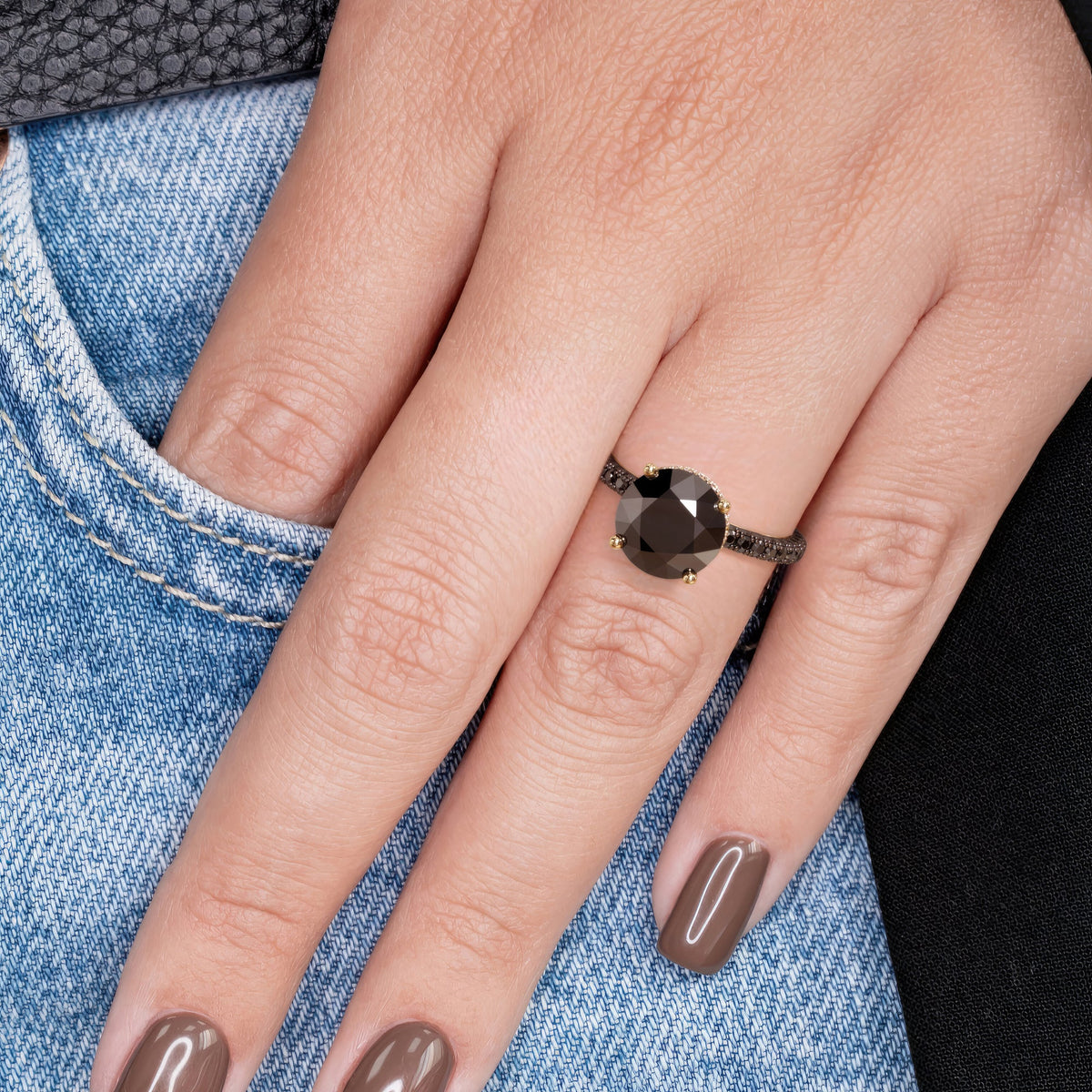
Our Kintsugi engagement ring is a round natural black diamond, 2.44 carats, held in four claws above a satin 14K gold band. A fine crack runs through the band, filled with black enamel. The break is not hidden, and the stone sits on top of it, whole. It comes in yellow, rose or white gold, with its diamond certificate. Like every black diamond we set, it is natural and earth-mined, and its color is enhanced, which the certificate states.
Is a kintsugi engagement ring a bad sign for a marriage?
Some people hesitate: a crack on the day you promise forever? Look at what the crack means. A kintsugi piece is not a broken ring. It is a ring about repair: the decision that when something breaks, you will mend it together and not throw it away. That is closer to what a marriage actually asks than a flawless stone ever was.
It is also why kintsugi rings are chosen so often the second time: for a second marriage, for a couple who came back after a separation, for vow renewals after an illness or a hard year. One person on Reddit described a custom engagement ring set with a diamond from their family's past, and surprising their fiancé with a kintsugi ring, a nod to the kintsugi he practices himself. Two rings, both about history carried forward.
Who wears a kintsugi ring?
People who know what it cost them to get here. The moments we hear about most:
| The moment | What the ring says | A piece that fits |
|---|---|---|
| An engagement after a hard road | We broke, we mended, we chose each other anyway | Kintsugi ring: 2.44 ct round black diamond, black enamel crack |
| After a divorce or a breakup | A vow to yourself; the old ring is not the end of the story | Disturbed: 0.25 ct marquise black diamond, one rough side, one polished |
| Recovery, remission, sobriety | The rough stretch left a mark, and it passed | Smoothen: 0.60 ct oval black diamond in a band worn smooth |
| A wedding band or a vow renewal | What remains carries on | Gravitational Wave band: one black diamond on a wave of gold |
| Something you wear every day, not on the finger | The seam, close to you | Kintsugi huggie earrings: black enamel seams, sold as a pair |
All of them are part of REMNANT, in solid 14K gold, yellow, rose or white.
What should I do with my wedding ring after a divorce?
There is no right answer, and the people who have been there say so. Some keep the ring in a drawer until it no longer hurts to look at. Some sell it and let the money pay for the new beginning. Some move it to the right hand because they simply love the stone. Some have it redesigned, so the metal and the diamond stay but the story changes.
And some leave the old ring alone and buy themselves a new one: not a replacement, but a marker. A ring that says the break happened, and you are the one who picked up the pieces. That is the ring kintsugi was made for.

Can kintsugi repair a broken ring?
It depends on what broke. Kintsugi is a craft for ceramics, and kintsugi artists do mend cracked stone, jade and porcelain rings with it. The honest worry people raise is wear: a lacquer or epoxy seam on a ring meets water, soap, heat and knocks every day, which a bowl on a shelf never does. Ask the artist how the repair holds up to hand washing and showers before you wear it daily.
A broken gold or platinum ring is a different job. A jeweler repairs metal by soldering or replacing the damaged section, not with lacquer. If you want the history to show, ask for a seam in a contrasting gold or a visible join; many jewelers can do it. A tungsten ring cannot be soldered or resized, so the usual path there is a new ring that keeps the old one's meaning.
How do you care for a ring with black enamel?
Treat it like any fine ring with a decorative inlay. Take it off for the gym, gardening and heavy work, where a hard knock can chip enamel or a stone. Keep it away from harsh chemicals and ultrasonic cleaners. Clean it with warm water, a drop of mild soap and a soft brush, and dry it with a soft cloth. Store it on its own so harder stones do not scratch the gold. Black diamonds are hard (10 on the Mohs scale) but can chip on a sharp edge, so a yearly check of the claws is a good habit. More on daily wear in our black diamond engagement ring guide.
Which gold is closest to traditional kintsugi?
Yellow gold, because traditional kintsugi seams are gold. On our Kintsugi ring the band is the gold and the crack is black, so yellow gold reads as the warmest, most "kintsugi" version. White gold makes the black line and the black diamond stand out most sharply, and rose gold sits between the two. If you are choosing a black stone at all, it helps to know how it compares: black diamond vs onyx, spinel and moissanite.
Kintsugi rings: FAQ
What does a kintsugi ring symbolize?
Repair and resilience. Like a bowl mended with gold, it shows that something broke and was put back together, and that the history of the break is part of its beauty, not something to hide.
What is the difference between kintsugi and kintsukuroi?
Kintsugi means "golden joinery" and kintsukuroi means "golden repair". Both name the same Japanese craft of mending broken pottery with lacquer and powdered gold.
Can a kintsugi ring be an engagement ring?
Yes. Many couples choose one because it says they will mend what breaks instead of giving up. It is a frequent choice for second marriages and for couples who came through a hard season together.
Is a kintsugi ring made with real gold?
It depends on the maker. Traditional kintsugi uses real powdered gold over urushi lacquer, while craft kits use gold-colored powder. Our Kintsugi ring is solid 14K gold, in yellow, rose or white, with a crack line filled with black enamel.
Is a kintsugi ring durable enough for everyday wear?
A solid gold ring with an enamel seam is made to be worn. Take it off for the gym and heavy work so the enamel and the stone are not knocked. A lacquer or epoxy repair on a stone or ceramic ring is more delicate; ask the artist about water and heat.
Is the black diamond in the Kintsugi ring natural?
Yes. It is a natural, earth-mined round black diamond of 2.44 carats. Its color is enhanced, and the enhancement is stated on the certificate that comes with the ring.
Is there a kintsugi wedding band or a kintsugi ring for men?
For a matching pair, many couples pair the Kintsugi engagement ring with a band from the same collection, such as the Gravitational Wave band or the Starz engraved band, which comes in a 5 mm width for men and 2 mm for women.
How long does it take to make a Kintsugi ring?
Each ring is made to order in 10-14 business days, plus shipping. One piece is ready to ship: yellow gold, US size 7.

Leave a comment
This site is protected by hCaptcha and the hCaptcha Privacy Policy and Terms of Service apply.