






How Should Your Diamond Shape Reflect and Refract?
Diamonds both refract and reflect light. Light bends (refracts) as it enters the diamond, bounces (reflects) off the facets inside, then bends again as it leaves through the top, where it splits into flashes of color. The shape and cut of the diamond decide how much of that light comes back to your eye, which is why two diamonds of the same weight can look so different.
Below: what happens to light inside a diamond, whether a diamond "shines" on its own, and how each shape, from round to emerald cut, handles light.
Do diamonds reflect or refract light?
Both, in three steps:
- Refraction on the way in. Diamond has a refractive index of about 2.42, one of the highest of any natural gem, so light slows down sharply and bends as it enters.
- Reflection inside. Light that hits an inner facet at a steep enough angle (beyond about 24.4 degrees, diamond's critical angle) cannot escape and is reflected, a process called total internal reflection. A well-cut diamond sends the light from one pavilion facet to the opposite one and back up.
- Refraction and dispersion on the way out. As light leaves through the crown it bends again and separates into spectral colors, the flashes jewelers call fire.
Some light is also reflected straight off the surface: about 17% of the light that meets a polished diamond face-on. That surface shine, called adamantine luster, is part of why a diamond looks brighter than glass.
Do diamonds shine on their own?
No. A diamond gives back light; it does not make it. In a dark room it looks dark. Some diamonds fluoresce, usually blue, under ultraviolet light, but that is a reaction to UV, not light of their own. What people call a diamond's "shine" is the light it returns: brilliance (white light), fire (color) and scintillation (the flashes as it moves). Each is explained in brilliance vs fire vs scintillation.
How does diamond shape change the way light comes back?
Most shapes are brilliant cuts, with many triangular and kite-shaped facets that break light into small, bright sparkles. Emerald, Asscher and baguette cuts are step cuts, with long, flat facets that return light in fewer, broader flashes.
| Shape | Cut style | How it handles light | What to look for |
|---|---|---|---|
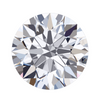
| Round | Brilliant (57-58 facets) | Returns the most light when well cut: the brightest and most even sparkle | Cut grade matters most |
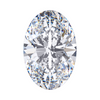
| Oval | Brilliant | Sparkles much like a round, and looks larger for its weight | A dark "bow-tie" across the middle |
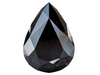
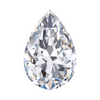
| Pear | Brilliant | Round sparkle at one end, a point at the other | Bow-tie; the point needs a protective prong |
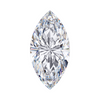
| Marquise | Brilliant | The largest look for its weight; lively, dramatic sparkle | Bow-tie; two points to protect |
| Princess | Brilliant (square) | Bright, crisp sparkle close to a round | Protected corners |
| Cushion | Brilliant, larger facets | Soft, rounded corners; broad flashes and strong fire | Facet pattern varies from stone to stone |
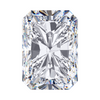
| Radiant | Brilliant facets in a rectangle | Very lively: the sparkle of a brilliant in the outline of an emerald cut | Even brightness corner to corner |
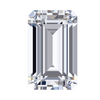
| Emerald and baguette | Step cut | A "hall of mirrors": wide flashes of light and dark instead of sparkle | Clarity and color show more, so choose them carefully |
| Heart | Brilliant | Good sparkle when cut symmetrically | Even lobes and a clear cleft |

Why do some diamonds have a dark bow-tie?
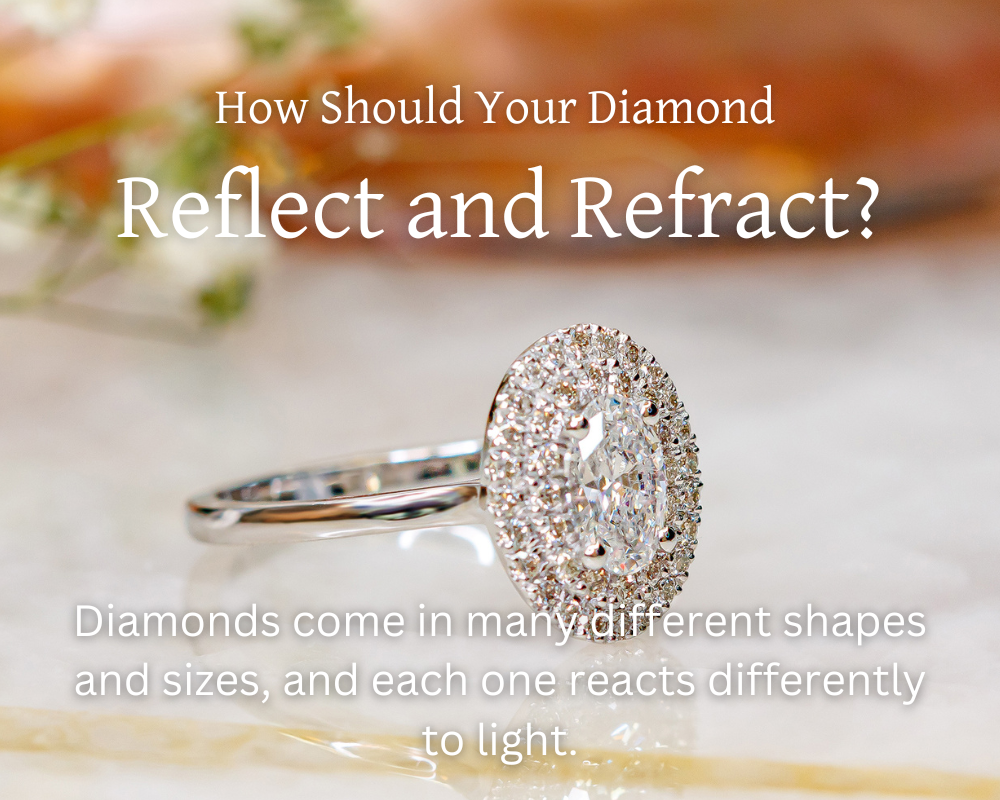
In elongated brilliant shapes (oval, pear, marquise and heart), the facets across the middle sit at angles where some light leaks out of the bottom instead of reflecting back up. The result is a darker band shaped like a bow-tie. A soft bow-tie is normal and gives the stone contrast; a heavy one makes the center look dead. Look at the diamond in a video or in daylight, as it moves. The single oval of our Moonlit Sky ring sits on four claw prongs, so light reaches it from the sides too.
Why does an emerald cut sparkle less?
It is not meant to sparkle the same way. Its long step facets work like mirrors facing each other, so it returns light in broad, calm flashes. That clarity of line is why emerald cuts suit art deco designs such as the Reverie ring. Because the large facets act like windows, inclusions show more easily than in a brilliant cut.
Do black diamonds reflect light?
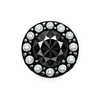
Yes, but differently. A black diamond is nearly opaque, so very little light travels through it and comes back out. What you see is the surface: light reflecting off its polished facets with the same high luster as any diamond. The effect is a deep, mirror-like shine rather than white sparkle, which is why black diamonds look so striking next to white ones in black and white diamond rings. Our black diamonds are natural and color enhanced, and the certificate says so. How a black diamond compares with onyx, spinel and black moissanite: black diamond vs onyx vs spinel vs moissanite.
How cut quality affects light performance
Shape sets the style; cut quality decides how well it performs. A diamond cut too deep or too shallow lets light leak out of the sides or bottom, and even a large, clean stone then looks glassy or dark. For the full picture, read diamond light performance explained.
Diamond reflection and refraction: FAQ
Do diamonds reflect or refract light?
Both. Light refracts (bends) as it enters a diamond, reflects off the facets inside, and refracts again as it leaves, splitting into colors. About 17% of the light is also reflected straight off the surface.
What is the refractive index of a diamond?
About 2.42. It is one of the highest of any natural gemstone, which is why diamonds bend light so strongly and return so much of it.
Do diamonds shine in the dark?
No. A diamond only returns light that reaches it. Some diamonds glow, usually blue, under ultraviolet light, but they do not give off light of their own.
Which diamond shape sparkles the most?
A well-cut round brilliant returns the most light. Radiant, oval, cushion and princess cuts come close. Step cuts such as the emerald cut flash rather than sparkle.
Do black diamonds sparkle?
They shine rather than sparkle. A black diamond is nearly opaque, so its beauty comes from light reflecting off its polished surface, a deep, mirror-like luster.


Leave a comment
This site is protected by hCaptcha and the hCaptcha Privacy Policy and Terms of Service apply.