



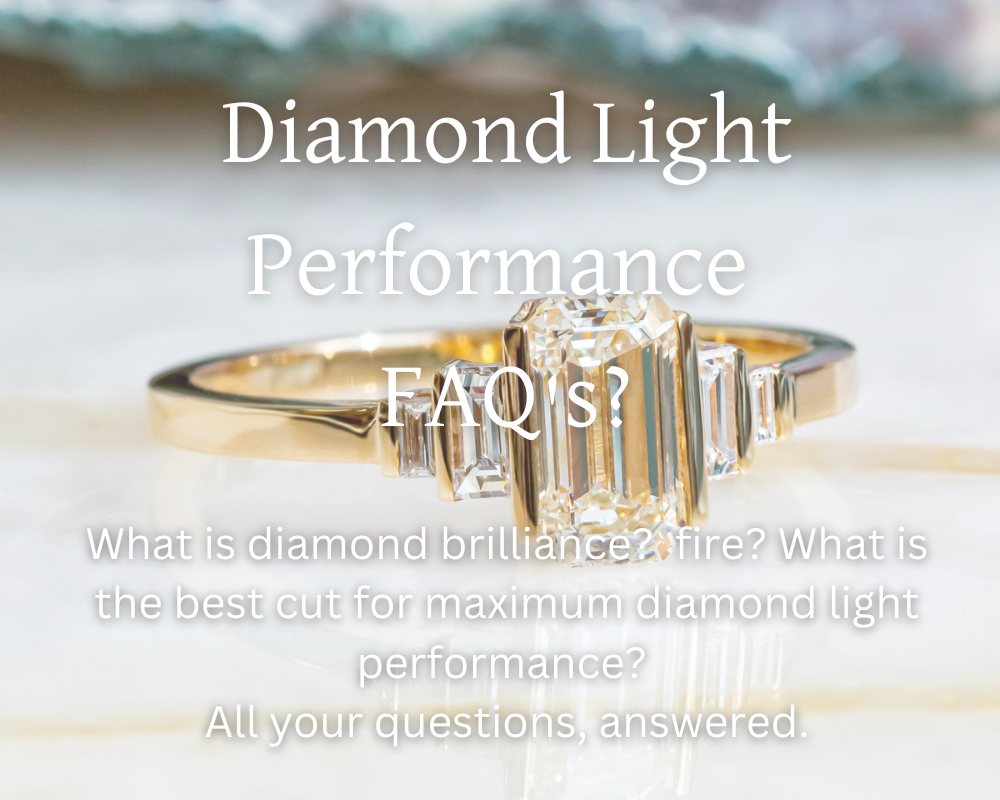
Diamond Light Performance FAQ: Brilliance, Fire and Sparkle
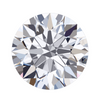
What is diamond light performance? It is how a diamond handles light: how much white light it returns (brilliance), how much it splits into flashes of color (fire) and how it flashes as it moves (sparkle, or scintillation). Cut quality decides it more than anything else: a diamond with good proportions, symmetry and polish sends light back up through its top instead of leaking it out of the bottom.
| Term | What you see | What drives it |
|---|---|---|
| Brilliance | Bright white light from the top of the stone | Proportions and polish |
| Fire | Flashes of rainbow color | Dispersion: the stone splits white light into colors |
| Sparkle (scintillation) | Points of light flashing on and off as the diamond, the light or you move | Facet pattern and symmetry |
| Contrast | The pattern of light and dark facets that gives a diamond its look | Cut design and angles |
For the science behind each term and how it depends on the 4Cs, read light performance terms, science and the 4Cs, or see our diamond light performance features.
What is diamond brilliance?
Diamond brilliance is the brightness, the white light reflected back to you from the diamond. It depends on the diamond's cut, symmetry and polish.
What is diamond fire?
Diamond fire is the rainbow-like flashes of color you see when light enters a diamond, splits into colors and bounces back out. It is also called dispersion, and it depends on the cut and on the angle of the light.
What is diamond refraction?
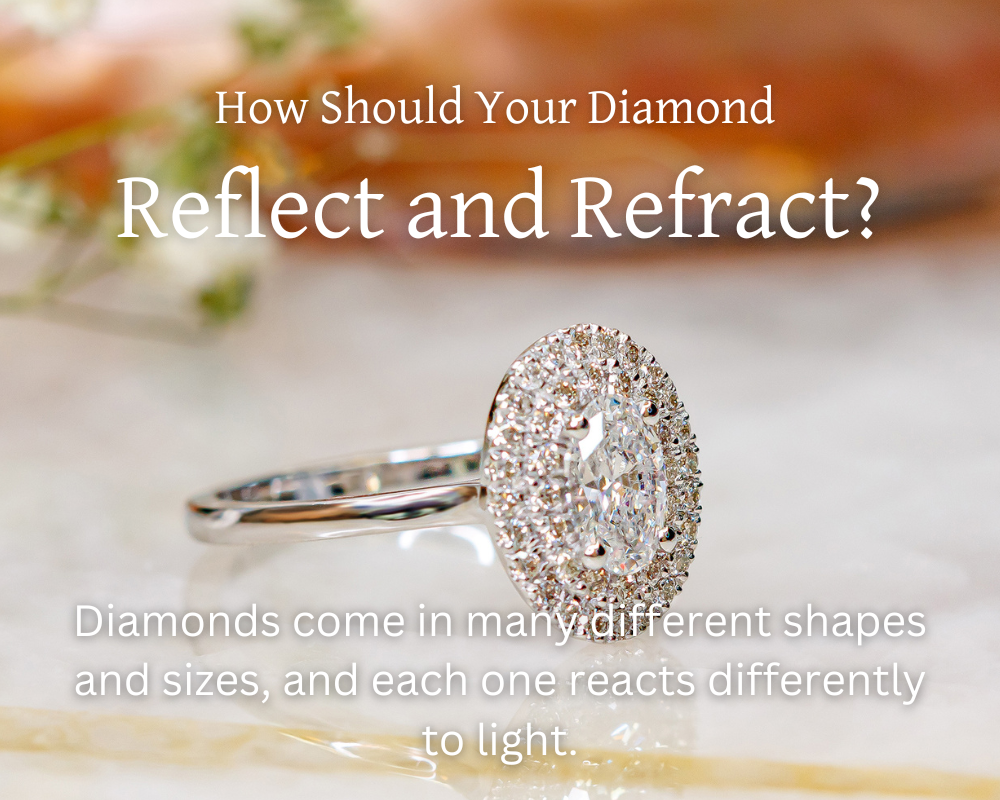
Refraction is the bending of light as it passes into a diamond. A diamond has a high refractive index, which means light slows down and bends sharply inside it. That is what lets a well cut diamond reflect light from facet to facet and send it back up through the top.
What is the difference between light performance and brilliance?
Light performance is the whole picture: brilliance, fire and sparkle together. Brilliance is one part of it, the white light alone.
Which cut gives the best light performance?
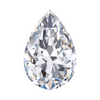
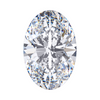
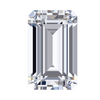
A diamond with an excellent or ideal cut grade. For a round brilliant, the cut grade on a lab report is the best single guide. Fancy shapes such as oval, pear or emerald have no single cut grade from most labs, so look at the proportions and, above all, at the stone itself in video or in person. Round brilliants are designed for maximum brilliance; step cuts such as emerald show broader flashes and more contrast instead.
Can light performance be improved after a diamond is cut?
Only by recutting it, which costs weight and is rarely worth it. That is why the cut has to be right the first time.
How do I choose a diamond with good light performance?
- Choose a high cut grade (excellent or ideal on a round).
- Ask for the diamond's lab report and look at its proportions, symmetry and polish.
- Watch the stone move in a video or in person: you want even brightness, color flashes and no dark center or dull "window".
- Compare stones with similar cut grades side by side, under the same light.
Each of our natural diamond engagement rings lists its center stone's carat, color and clarity on the product page: for example Beaming Light, a 0.8 carat round, or Firefly Glow, a 1 carat round on a twisted band. See all round diamond engagement rings and our natural diamond engagement rings.
How do I keep my diamond sparkling?
Keep it clean. Oil, lotion and dust on the back of the stone stop light from entering, and a dirty diamond can look dull. Soak it in warm water with a little mild soap, brush gently behind the stone with a soft toothbrush, rinse and dry. A setting that lets light reach the diamond from the sides also helps.
Want to know more about cut, color, clarity and carat? Read our diamond education guide.
FAQ
What is diamond light performance?
How a diamond returns light: its brilliance (white light), fire (color flashes) and sparkle (flashes as it moves).
What is the difference between brilliance and fire?
Brilliance is the white light a diamond returns. Fire is the light it splits into rainbow colors.
Which diamond cut sparkles the most?
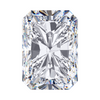
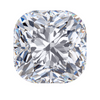
A well cut round brilliant is designed for maximum brilliance. Among fancy shapes, oval, pear, cushion and radiant cuts are also brilliant cuts with strong sparkle.
Does clarity affect light performance?
Only in extreme cases. Small inclusions that are not visible to the eye do not change how a diamond sparkles; cut matters far more.
Can a dirty diamond lose its sparkle?
Yes. Oil and dirt on the stone block light. A gentle clean with warm soapy water brings it back.
Can light performance be improved after cutting?
Only by recutting the diamond, which loses weight. Choose a well cut stone from the start.

,%20how%20much%20it%20splits%20into%20flashes%20of%20color%20(fire)%20and%20how%20it%20flashes%20as%20it%20moves%20(s...)
Leave a comment
This site is protected by hCaptcha and the hCaptcha Privacy Policy and Terms of Service apply.