













Article: Are Black Diamonds Durable? Chips, Scratches and Daily Wear Explained
Are Black Diamonds Durable? Chips, Scratches and Daily Wear Explained
Yes: a black diamond is durable enough to wear every day, as long as the setting protects it. It is a 10 on the Mohs hardness scale, like every diamond, so it will not scratch in daily life. But it is less tough than a white diamond. The thousands of tiny fractures that make it black also make it easier to chip if it takes a hard, sharp knock. Hard to scratch, possible to chip: that is the whole answer, and the rest of this page is how to live with it.
We hear the same worries again and again, from buyers on forums and from people sitting across the table from us. "Will it chip?" "I plan on wearing this every day for life and want to make sure it's durable." "Can I wash dishes in it?" And from someone whose diamond did chip after the ring fell on a tile floor: "I didn't think it was possible." Here is what actually happens to a black diamond on a hand, and what to do about it.
Are black diamonds as hard as white diamonds?
Yes. Hardness measures how well a stone resists scratching, and a black diamond scores 10 on the Mohs scale, the top of the scale and the same as a colorless diamond. GIA's black diamond buying guide says black diamonds share "the remarkable hardness and durability common to all diamonds."
In practice, almost nothing you touch in a day can scratch it. Household dust contains tiny grains of quartz, which is why softer stones such as onyx slowly lose their polish. A diamond is far harder than quartz, so its facets stay sharp and mirror-bright for decades. The only thing that scratches a diamond is another diamond, which is why diamond pieces should not be tossed in one pouch together.
Do black diamonds chip or crack?
They can, and it is the honest answer most sellers skip. Hardness is not the same as toughness. Toughness is how well a stone resists breaking and chipping, and here a black diamond is weaker than a white one.
A black diamond gets its color from inside. According to GIA, black diamonds "often contain hundreds or even thousands of microscopic fractures and inclusions," and these "can make the stone more brittle and prone to chipping or breaking if struck sharply." Every diamond also has cleavage planes, directions in its crystal along which a hard blow can split it. Put those together and you get the real risk: not daily wear, but one sharp knock in the wrong place.
What a chip usually looks like: a small piece missing at the edge (the girdle) or at a point. The places that take the hit are the ones that stick out:
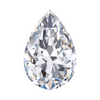
- the tip of a pear, marquise or heart shape
- the corners of a princess or other square cut
- a thin, exposed girdle on a stone held by only four small prongs
- a tall setting that lifts the stone above the band, where it meets door frames and countertops first
Most chips come from a single moment, not from years of wear: a ring dropped on stone tile, a hand hitting a car door, a dumbbell, a granite counter. That is why the setting matters more than anything else.

Black diamond vs white diamond, moissanite, spinel and onyx: which holds up best?
| Black diamond | White diamond | Black moissanite | Black spinel | Onyx | |
|---|---|---|---|---|---|
| Hardness (Mohs) | 10 | 10 | 9.25 | 8 | 6.5 to 7 |
| Scratches in daily wear? | No | No | Very rarely | Rarely | Yes, over time it loses its polish |
| Main risk | Chipping from a sharp knock (many internal fractures) | Chipping at points or a thin girdle from a sharp knock | Chipping from a hard knock | Scratches and chips with rough wear | Scratches; chips at the edges |
| Everyday engagement ring? | Yes, in a protective setting | Yes | Yes | Yes, with some care | Occasional wear |
| Ultrasonic cleaner? | No | Usually fine, unless treated | Ask the maker | Ask the maker | No (often dyed) |
If you are still deciding between these stones, our side-by-side guide covers how they look and how to tell them apart: black diamond vs onyx, spinel and black moissanite.
Which settings protect a black diamond best?
The best protection is metal between the stone and the world. In order of protection:
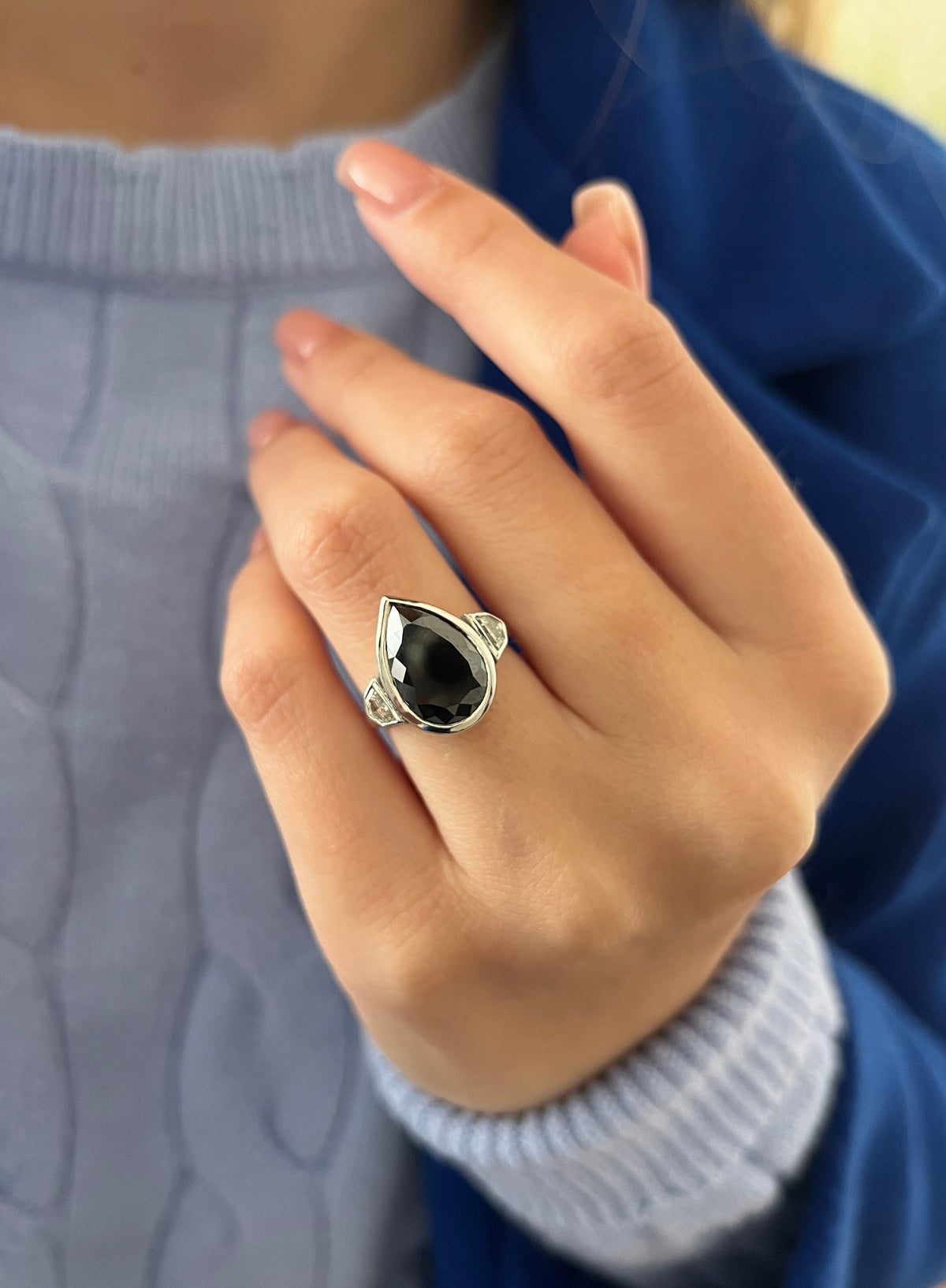
- Full bezel. A continuous rim of gold wraps the whole edge of the stone, points included. It is the most protective setting there is, and with a black diamond the gold outline looks sharp. Night Crawler holds a 5.5 carat oval black diamond this way, and Negra Sombra (pictured above) wraps a 6.74 carat pear, the most fragile shape, tip and all.
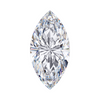
- Bezel on a point-heavy shape. Marquise cuts have two points to protect. Curva Scura sets a 2.22 carat marquise black diamond in a full bezel on a split band.
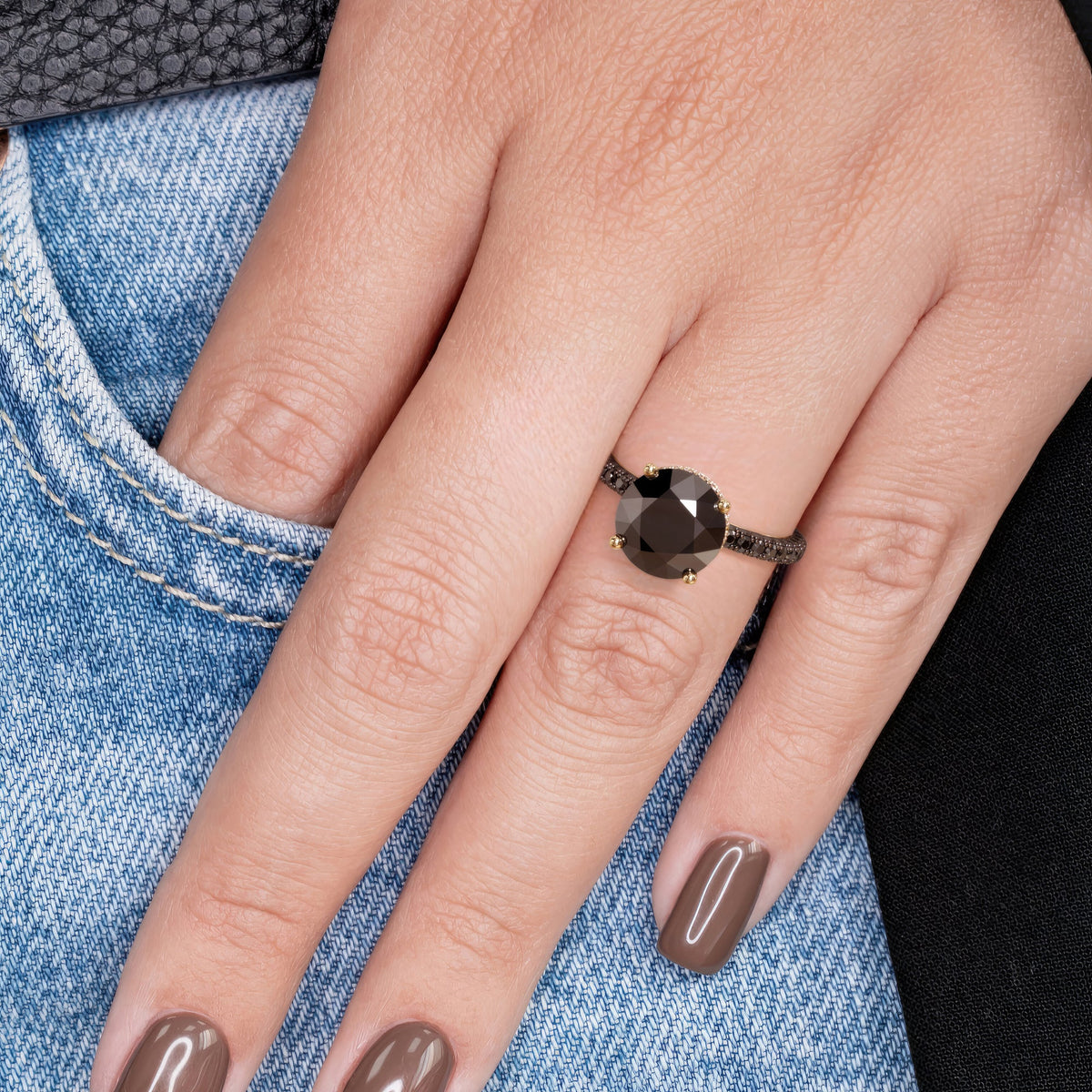
- Halo. A ring of smaller diamonds around the center stone takes knocks before the center does. Dark Obsession is a 1 carat round black diamond in a vintage halo; more in our black diamond halo engagement rings.
- Half bezel or V-prongs. Metal guards the points or the sides while letting more of the stone show.
- Four or six claw prongs. Beautiful and open, but they leave the girdle exposed. Fine for a round stone if you are careful; less ideal for a pear or marquise you plan to wear while working with your hands.
A lower profile also helps: a stone that sits close to the finger meets fewer edges. Browse every shape and setting in black diamond engagement rings, or pair a ring with one of our black diamond wedding bands.
Can you wear a black diamond ring every day?
Yes. A black diamond in a protective setting is made for daily wear. A few habits keep it that way:
- Take it off for the gym, gardening, moving furniture, rock climbing and anything that puts your hand against metal or stone.
- Take it off for cleaning with bleach or other harsh chemicals; chlorine is hard on gold.
- Put it in one place when it is off (a dish by the sink, not the edge of the counter), and store it apart from other diamond pieces.
- Look at it once in a while. If the stone moves, a prong is bent or the bezel looks lifted, stop wearing it and have it checked. GIA recommends having settings checked regularly; once a year is a good rhythm.
Washing your hands and doing dishes with it on is fine for the stone. The risk in the kitchen is not water, it is the knock against the sink or a cast-iron pan.
What should you do if your black diamond chips?
Take the ring off right away and keep it somewhere safe; a chipped stone can chip further. Then show it to a jeweler. A small chip can often be polished out by recutting, which removes a little weight and may change the outline slightly. A larger chip usually means a new stone. If your ring is insured, check the policy before any work. If it is one of ours, send us a photo through our appointment page and we will tell you honestly what can be done.
How do you clean a black diamond ring?
Soak it for a few minutes in warm water with a little mild dish soap, brush gently behind the stone with a soft toothbrush, rinse and dry with a lint-free cloth. Do not use ultrasonic or steam cleaners: GIA advises against them for black diamonds, because vibration and heat can stress the internal fractures. A clean black diamond shows its mirror-like shine again; a film of hand cream is what makes it look dull.
Does a color-enhanced black diamond wear off or fade?
No. Every black diamond we set is a natural, earth-mined diamond whose color is enhanced, and the certificate that comes with the piece states it. The black is created inside the stone, where heat turns its tiny fractures to graphite, so there is no coating to rub off and nothing to fade. A coated stone is a different product, and GIA does not issue reports for coated diamonds. Read more in natural vs color-enhanced black diamonds.
If you are weighing a black diamond for an engagement ring, our black diamond engagement ring guide covers shapes, sizes and styles, and how much a black diamond ring costs covers price by carat. Each ring is made to order: production takes 10-14 business days, plus shipping.
Black diamond durability: FAQ
Do black diamonds chip easily?
More easily than a white diamond, yes, but only from a hard, sharp knock. Black diamonds often contain thousands of tiny fractures and inclusions, which GIA says can make them more prone to chipping or breaking if struck sharply. Normal daily wear does not chip them. A bezel or halo setting that covers the edge and the points protects the stone.
Do black diamonds scratch easily?
No. A black diamond is a 10 on the Mohs hardness scale, the same as any diamond, so keys, sand, dust and countertops cannot scratch it. Only another diamond can. Store diamond pieces apart so they do not rub against each other.
Can I wear a black diamond engagement ring every day?
Yes, if it is set to protect the stone. Choose a bezel, half bezel or halo setting, take the ring off for the gym, gardening, moving furniture and cleaning with chemicals, and have the prongs or bezel checked about once a year.
Are black diamonds weaker than white diamonds?
They are just as hard, so they resist scratches the same way. They are less tough: the internal fractures that make the stone black also give a hard blow more places to start a chip. That is a reason to pick a protective setting, not a reason to avoid them.
Can a chipped black diamond be fixed?
Sometimes. A cutter can often polish out a small chip by recutting the stone, which costs a little carat weight. A larger chip usually means replacing the stone. Take the ring off as soon as you see a chip, so it does not grow, and show it to your jeweler.
Does the black color wear off?
Not on a color-enhanced black diamond: the black comes from graphite inside the stone, so there is nothing on the surface to wear away. Our black diamonds are natural, earth-mined and color enhanced, as their certificate states. Black plating on metal is different and can wear over time.
How do I clean a black diamond ring?
Warm water, a little mild dish soap and a soft toothbrush, then rinse and dry with a lint-free cloth. Skip ultrasonic and steam cleaners: GIA advises against them for black diamonds because of their internal fractures.
Why are black diamonds cheaper than white diamonds?
Most black diamonds in jewelry start as heavily included, fractured stones that would not sell as white diamonds, and their color is enhanced. That makes them more affordable than white diamonds of the same size. It does not make them softer: they are still diamonds, with a hardness of 10.

Leave a comment
This site is protected by hCaptcha and the hCaptcha Privacy Policy and Terms of Service apply.